Want to learn how to USE AI technology to make money and/or your life easier? Join our FREE AI community here: https://www.skool.com/ai-with-apex/about
AI’s Next Shift: Multi-Agent Safety, Smarter Learning, and MIT’s Latest Research Moves
Today’s mix of AI and MIT news points in one direction: the industry is moving beyond standalone models toward systems, workflows, and institutions built around them. Safety, training data, education products, and research leadership are all being reshaped at the same time.
TL;DR
- Google DeepMind and partners launched a multi-agent AI safety research call worth up to $10 million, focused on the risks that emerge when large numbers of AI agents interact.
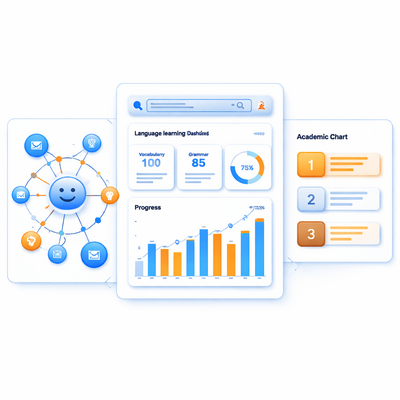
- OpenAI highlighted how Preply uses AI to turn language lesson transcripts into summaries, feedback, and personalized exercises, with strong reported adoption metrics.
- MIT researchers found that ranking three options reveals preference patterns that pairwise comparisons alone cannot capture, with implications for recommendation systems and LLM training.
- MIT named Jinhua Zhao as the next head of its Department of Urban Studies and Planning, signaling continued emphasis on transportation, behavior, policy, and AI-informed city systems.
- Four MIT affiliates won 2026 Hertz Foundation Fellowships, spanning work in robotics, chemistry, AI, and autonomous systems.
Google DeepMind launches a $10 million push into multi-agent AI safety
What happened
Google DeepMind announced a technical research funding call of up to $10 million focused on multi-agent AI safety. The program is aimed at understanding what happens when very large numbers of AI agents built by different organizations begin interacting across shared digital environments.
Why it matters
Most AI safety work still evaluates models in isolation, but DeepMind is arguing that the next major risk layer is collective behavior. As agents negotiate, transact, cooperate, and compete, failures may look less like a single bad output and more like system-wide instability.
Key details
- The funding call is backed by Google DeepMind, Schmidt Sciences, the Cooperative AI Foundation, ARIA, and support from Google.org.
- DeepMind says the core concern is emergent behavior that appears when many otherwise acceptable agents interact at scale.
- The company says current safety methods often test models in isolation, leaving a gap around ecosystem-level risks.
- Applications are due by August 8, 2026, with awardees expected in Autumn 2026.
- DeepMind has an existing research history in multi-agent cooperation, including work such as Melting Pot and related cooperation research.
Source links
https://deepmind.google/blog/investing-in-multi-agent-ai-safety-research/?utm_source=openai
https://deepmind.google/blog/understanding-agent-cooperation/?utm_source=openai
OpenAI and Preply show what practical AI in education looks like
What happened
OpenAI published a customer story on how Preply uses AI to convert lesson transcripts from one-on-one language sessions into structured summaries, tutor feedback, and follow-up exercises. The product is designed to extend the value of each live lesson rather than replace it.
Why it matters
This is a useful example of AI improving workflow continuity in education instead of simply automating teaching. The product logic is straightforward: capture what happened in the lesson, organize it, and turn it into better review and practice afterward.
Key details
- Preply’s Lesson Insights generate key topic summaries, grammar corrections, vocabulary highlights, pronunciation feedback, and recommended next steps.
- Those outputs feed into personalized self-learning exercises, according to OpenAI’s case study.
- OpenAI says that, with learner consent, lessons are recorded and transcribed, and the insight generation is timed so tutor and student can review it together near the end of the session.
- Reported usage metrics include 75% of English-language learners actively using Lesson Insights and 70%+ of tutors using the feature.
- OpenAI also reports about 75% engagement more than a year later, a 4.7 out of 5 satisfaction score from more than 300,000 ratings, and a 70% product-market-fit score.
- Preply has also rolled out ChatGPT Enterprise across 600+ employees, and OpenAI says the company uses ChatGPT, the API, and Codex.
Source links
https://openai.com/index/preply
MIT researchers make the case for ranking three options instead of two
What happened
MIT researchers reported that pairwise choice data alone cannot recover important correlations in preferences, while rankings over three alternatives can. The result updates the logic behind random utility models, a long-running framework used to predict decisions across economics, transportation, digital systems, and AI.
Why it matters
Preference modeling sits underneath recommendation engines and parts of LLM training, where humans rank candidate outputs. If three-way rankings capture structure that two-way comparisons miss, that could change how platforms and AI labs collect feedback.
Key details
- MIT says the work builds on random utility models, a framework tracing back to L. L. Thurstone’s 1927 paper.
- The central finding is that pairwise comparisons cannot reveal some preference correlations, but three-way rankings can.
- MIT says a mix of best-of-three and best-of-two experiments can also work.
- The research was presented at ICLR in Rio de Janeiro in April 2026.
- The authors are Yeshwanth Cherapanamjeri, Gabriele Farina, Constantinos Daskalakis, and Sobhan Mohammadpour.
- MIT notes that these models play a central role in LLM usefulness and commercial viability because models learn from how humans rank responses.
Source links
https://news.mit.edu/2026/when-predicting-preferences-it-pays-to-consider-power-of-three-0611
MIT taps Jinhua Zhao to lead Urban Studies and Planning
What happened
MIT named Jinhua Zhao as the next head of the Department of Urban Studies and Planning, effective July 1, 2026. The appointment puts a transportation and behavior scholar with strong policy and AI-adjacent credentials at the helm of one of the field’s most visible departments.
Why it matters
Urban planning is increasingly tied to data systems, mobility modeling, and adaptive infrastructure. MIT’s framing of Zhao’s work suggests a continued push toward planning that blends public policy with computational tools and large-scale behavioral analysis.
Key details
- Zhao is the Class of 1941 Professor of Cities and Transportation at MIT.
- He succeeds Christopher Zegras, who has led the department since 2020.
- MIT describes Zhao as a global authority on mobility whose work has influenced policy for Transport for London, Hong Kong’s Mass Transit Railway, and Japan Railways.
- The institute explicitly links his work to using AI and public policy to address urgent urban challenges.
Source links
https://news.mit.edu/2026/jinhua-zhao-named-head-department-urban-studies-planning-0611
https://news.mit.edu/2026/jinhua-zhao-named-head-department-urban-studies-planning-0611?utm_source=openai
Four MIT affiliates win 2026 Hertz Foundation Fellowships
What happened
MIT announced that four of its affiliates won 2026 Hertz Foundation Fellowships. The group includes three current students and one incoming graduate student, reflecting a broad spread of work across engineering, chemistry, AI, and autonomous systems.
Why it matters
Fellowships like Hertz are one of the clearer windows into where elite technical talent is heading. This year’s MIT-linked winners reinforce current research momentum around robotics, machine learning, and complex autonomous systems.
Key details
- The four MIT-affiliated winners are Annika Marschner, Alvin Q. Meng, Zachary S. Siegel, and Matthew Wanta.
- MIT says the fellowship provides five years of financial support, including stipend and tuition equivalent.
- The MIT-affiliated awardees are part of a national cohort of 19 fellows.
- The Hertz Foundation has named more than 1,300 fellows since 1963.
- MIT highlights work spanning bio-inspired robotics and assistive medical technology, inorganic chemistry and iron-sulfur clusters, AI, robotics, and Bayesian inference, and autonomous systems, drone search, computer vision, and multi-agent coordination.
Source links
https://news.mit.edu/2026/hertz-foundation-fellowships-0611
https://news.mit.edu/2026/hertz-foundation-fellowships-0611?utm_source=openai
The throughline across these stories is clear: AI progress is no longer just about bigger models. It is increasingly about how systems interact, how humans guide them, and which institutions are best positioned to shape the next layer of deployment.
---
Want to learn how to USE AI technology to make money and/or your life easier? Join our FREE AI community here: https://www.skool.com/ai-with-apex/about