Want to learn how to USE AI technology to make money and/or your life easier? Join our FREE AI community here: https://www.skool.com/ai-with-apex/about
AI Moves From Hype to Workflow: Google Tests Clinical Intake, OpenAI Hardens Agents, and Enterprise AI Shows Operational ROI
Today’s AI news has a clear pattern: the conversation is shifting away from model spectacle and toward deployment reality. The big questions now are where AI fits into real workflows, how it is supervised, and whether it delivers measurable value under real constraints.
TL;DR
- Google says its AMIE system completed a supervised real-world feasibility study for pre-visit primary care history taking with 100 adult patients at Beth Israel Deaconess Medical Center.
- OpenAI published a practical framework for defending agents against prompt injection, treating the problem more like social engineering than a simple jailbreak issue.
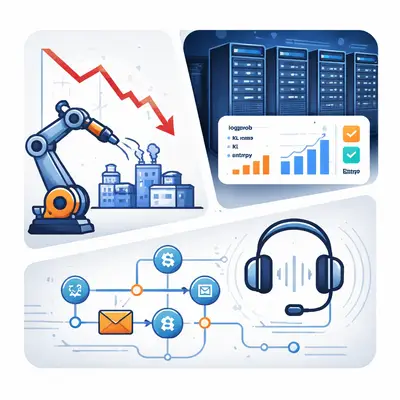
- OpenAI says Rakuten used Codex across operations and software delivery, with an estimated 50% reduction in mean time to recovery for incidents.
- NVIDIA says its AI-Q agent ranked first on DeepResearch Bench and DeepResearch Bench II, highlighting how research-agent systems are now being benchmarked as full stacks.
- MIT highlighted two longer-term trends: AI’s growing role in the physical sciences and the rising importance of anthropology and humane design in chatbot development.
Google moves AMIE into a real clinical workflow
What happened
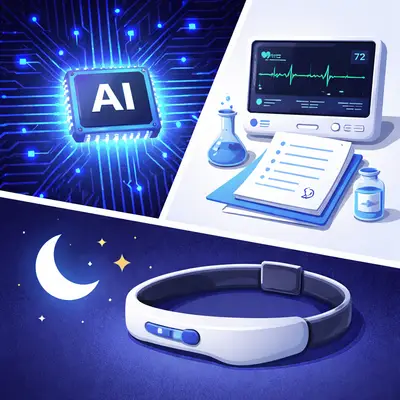
Google Research and Google DeepMind said AMIE was tested in a prospective, single-arm feasibility study inside an ambulatory primary care workflow with Beth Israel Deaconess Medical Center. The system was used for pre-visit clinical history taking through text, then generated a transcript and summary for the clinician before the appointment.
Why it matters
This is a more meaningful milestone than a benchmark or simulated head-to-head comparison because it places AI inside an actual care pathway. It also shows how healthcare deployment is likely to begin: not with autonomous diagnosis, but with supervised workflow support that can reduce intake burden and organize information before the physician visit.
Key details
- Google described the study as a prospective, single-arm feasibility study conducted with Beth Israel Deaconess Medical Center.
- The study included 100 adult patients, and 98 later attended their scheduled primary care visit.
- AMIE was used for pre-visit clinical history taking, not autonomous diagnosis or treatment.
- A physician supervised the AI interaction live and could intervene under predefined safety criteria.
- Google reported zero safety stops during the study.
- Google said AMIE and primary care physicians were rated on par for differential diagnosis quality and management-plan quality by clinical evaluators.
Source links
https://research.google/blog/exploring-the-feasibility-of-conversational-diagnostic-ai-in-a-real-world-clinical-study/
OpenAI publishes a security playbook for prompt injection
What happened
OpenAI published a detailed post on how to design agents that resist prompt injection. The company framed the issue as instructions hidden inside external content that can push an agent to do something the user did not ask for.
Why it matters
As AI agents gain the ability to browse, read documents, and take actions, the security problem starts to resemble phishing and privilege misuse more than a simple prompt bug. The most important shift in the post is architectural: systems should be designed so that even a successful manipulation has limited impact.
Key details
- OpenAI defines prompt injection as malicious or misleading instructions embedded in external content that an agent encounters while completing a task.
- The company argues that modern prompt injection increasingly looks like social engineering.
- OpenAI cited a 2025 example from external researchers in which an attack succeeded 50% of the time against ChatGPT in testing on a deep-research-style email task.
- The post argues that perfect content classification is not enough and that systems should constrain the impact of manipulation if it happens.
Source links
https://openai.com/index/designing-agents-to-resist-prompt-injection
Rakuten says Codex is helping cut incident recovery time
What happened
OpenAI published a customer story saying Rakuten has used Codex across operations and software delivery over the past year. The headline operational result is Rakuten’s estimate that Codex reduced mean time to recovery for incidents by roughly half.
Why it matters
The notable part of this story is not basic code generation. It is the claim that AI is helping on harder operational work such as diagnosis, recovery, review, and vulnerability checking, which is where many teams spend time under pressure.
Key details
- OpenAI says Rakuten has used Codex across operations and software delivery over the past year.
- Rakuten estimates a roughly 50% reduction in mean time to recovery (MTTR) for incidents.
- According to OpenAI, Codex is being used in KQL-based monitoring and diagnosis.
- OpenAI also says Codex is used for CI/CD code review and vulnerability checks.
- The case study frames the value around shipping faster and safer, not just generating code faster.
Source links
https://openai.com/index/rakuten
NVIDIA claims the top benchmark spots for its AI-Q research agent
What happened
NVIDIA said its AI-Q deep research agent ranked first on both DeepResearch Bench and DeepResearch Bench II. The company presented AI-Q as an open, modular architecture for research agents working across enterprise and web data.
Why it matters
The larger story is that the field is starting to benchmark full research-agent systems rather than just base models. Planning, orchestration, retrieval, and report generation are becoming competitive layers in their own right.
Key details
- NVIDIA says AI-Q scored 55.95 on DeepResearch Bench.
- NVIDIA says AI-Q scored 54.50 on DeepResearch Bench II.
- The company describes AI-Q as an open, modular architecture for deep research agents.
- NVIDIA says the system centers on an orchestrator, planner, and researcher pipeline.
- The company argues that the two benchmarks reward different strengths, including polished report generation and factual retrieval plus analysis.
Source links
https://huggingface.co/blog/nvidia/how-nvidia-won-deepresearch-bench
MIT sketches a two-way bridge between AI and the physical sciences
What happened
MIT highlighted Jesse Thaler’s view that AI and the mathematical and physical sciences should be understood as a two-way bridge. The article says a related white paper with recommendations for funders, institutions, and researchers was published in Machine Learning: Science and Technology.
Why it matters
This matters because it broadens the AI discussion beyond products and benchmarks. The claim is that science is not just a user of AI tools; it is also a source of ideas and methods that will shape the next generation of AI systems.
Key details
- MIT describes Thaler’s vision as a two-way bridge between AI and the mathematical and physical sciences.
- The article says the current AI wave was enabled by decades of work in those scientific fields.
- MIT says a white paper with recommendations for funding agencies, institutions, and researchers was published in Machine Learning: Science and Technology.
Source links
https://news.mit.edu/2026/3-questions-future-of-ai-and-mathematical-physical-sciences-0311
MIT brings anthropology into chatbot design
What happened
MIT also highlighted a cross-listed course called Humane User Experience Design, offered as 6.S061/21A.S02. The class combines computer science and anthropology to help students build chatbots with a stronger understanding of human interaction.
Why it matters
This is a useful reminder that better conversational systems will not come only from larger models. Product quality also depends on conversation design, social context, and a more realistic understanding of how people actually communicate.
Key details
- The course is 6.S061/21A.S02, titled Humane User Experience Design.
- It is cross-listed between computer science and anthropology.
- MIT says the class draws on linguistic anthropology to integrate interpersonal and interactional human needs into programming.
- The article argues that humane chatbot design requires more than technical capability alone.
Source links
https://news.mit.edu/2026/mit-class-uses-anthropology-to-improve-chatbots-0311
The throughline across all of these stories is simple: AI is being evaluated less as a novelty and more as infrastructure. Whether the setting is a clinic, a security stack, an incident-response loop, or a research workflow, the real test is no longer what the model can say, but what the system can safely do.
—
Want to learn how to USE AI technology to make money and/or your life easier? Join our FREE AI community here: https://www.skool.com/ai-with-apex/about