Want to learn how to USE AI technology to make money and/or your life easier? Join our FREE AI community here: https://www.skool.com/ai-with-apex/about
AI’s Next Phase Is Here: Compute, Memory, and Workflow Integration Take Center Stage
The AI story is shifting. The latest announcements suggest the industry is moving beyond model novelty and toward systems that can plug into real workflows, retain context, and operate across institutions.
That makes today’s news less about who has the flashiest model and more about who can turn AI into durable infrastructure.
TL;DR
- Mustafa Suleyman is arguing that AI progress is not near a hard wall, with compute growth still shaping the industry’s trajectory.
- Google Research introduced two academic agents focused on figure creation and literature-grounded peer-review workflows.
- IBM Research says agents improve meaningfully when they can learn from prior execution traces instead of starting fresh each time.
- OpenAI is framing enterprise AI as a unified agent platform strategy rather than a collection of separate tools.
- The broader pattern is clear: AI competition is moving toward orchestration, memory, and operational deployment.
Mustafa Suleyman says AI is not hitting a wall yet
What happened
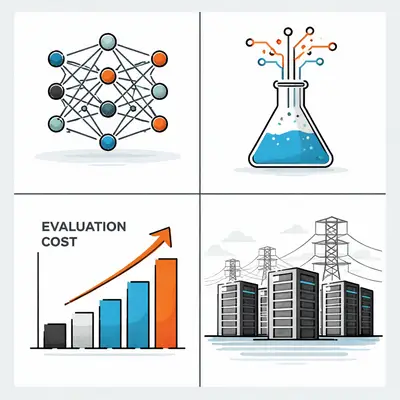
Mustafa Suleyman is pushing back on the idea that frontier AI progress is close to stalling. The core argument is that compute growth remains a decisive factor, and that the next phase of progress will be shaped not just by model training but by the economics and scale of inference as well.
Why it matters
This matters because it reframes the current AI debate away from model ceilings and toward infrastructure capacity. If the compute curve continues rising, then chip supply, energy availability, and deployment economics may matter as much as algorithmic breakthroughs.
Key details
- Suleyman’s position is that compute costs and availability will continue to shape AI’s future trajectory.https://m.economictimes.com/news/international/us/microsoft-ai-chief-mustafa-suleyman-says-compute-costs-will-shape-ais-future/amp_articleshow/129909412.cms?utm_source=openai
- Reported summaries of the MIT Technology Review item describe his argument as a direct challenge to the idea that AI scaling is ending.https://www.reddit.com/r/ChatGPT/comments/1sfvs0a/mustafa_suleyman_ai_development_wont_hit_a_wall/?utm_source=openai
- The implication is that the industry is entering an era where inference demand and infrastructure buildout become central strategic battlegrounds.https://m.economictimes.com/news/international/us/microsoft-ai-chief-mustafa-suleyman-says-compute-costs-will-shape-ais-future/amp_articleshow/129909412.cms?utm_source=openai
Source links
https://m.economictimes.com/news/international/us/microsoft-ai-chief-mustafa-suleyman-says-compute-costs-will-shape-ais-future/amp_articleshow/129909412.cms?utm_source=openai
https://www.reddit.com/r/ChatGPT/comments/1sfvs0a/mustafa_suleyman_ai_development_wont_hit_a_wall/?utm_source=openai
Google Research introduces academic agents for figures and peer review
What happened
Google Research introduced two AI systems aimed at academic workflows: PaperVizAgent for generating publication-style figures and ScholarPeer for producing literature-grounded peer-review style evaluations. The announcement points to a more ambitious vision of AI inside research operations, not just as a writing assistant.
Why it matters
This is a notable shift from generic chat interfaces to specialized knowledge-work tooling. It also raises a sharper question for academia: whether AI can reduce tedious work without also increasing the volume of synthetic, lower-quality output.
Key details
- PaperVizAgent is described as a five-agent workflow with a retriever, planner, stylist, visualizer, and critic.https://research.google/blog/improving-the-academic-workflow-introducing-two-ai-agents-for-better-figures-and-peer-review/
- Google says PaperVizAgent achieved an overall score of 60.2 in its evaluation and was the only framework tested there to exceed the reported human baseline of 50.0.https://research.google/blog/improving-the-academic-workflow-introducing-two-ai-agents-for-better-figures-and-peer-review/
- ScholarPeer is a search-enabled, context-aware multi-agent reviewer designed to situate papers in live literature and identify missing baselines and technical weaknesses.https://research.google/blog/improving-the-academic-workflow-introducing-two-ai-agents-for-better-figures-and-peer-review/
- Google says ScholarPeer outperformed prior automated reviewing systems in side-by-side evaluations and produced more critical, literature-grounded feedback.https://research.google/blog/improving-the-academic-workflow-introducing-two-ai-agents-for-better-figures-and-peer-review/
Source links
https://research.google/blog/improving-the-academic-workflow-introducing-two-ai-agents-for-better-figures-and-peer-review/
IBM Research pushes self-improving agents with ALTK-Evolve
What happened
IBM Research used the Hugging Face blog to present ALTK-Evolve, a framework designed to help agents learn from prior runs. Instead of treating each task as a fresh start, the system analyzes execution trajectories, extracts guidance, and reuses that guidance in future tasks.
Why it matters
This gets at one of the biggest practical issues in agent engineering: reliability. For enterprise deployments, the value of an agent often depends less on raw intelligence than on whether it can avoid repeating the same failures.
Key details
- The related paper is titled Trajectory-Informed Memory Generation for Self-Improving Agent Systems.https://arxiv.org/abs/2603.10600
- IBM says the method analyzes agent trajectories, identifies failures and inefficiencies, generates actionable learning signals, and retrieves relevant guidance later.https://huggingface.co/blog/ibm-research/altk-evolve https://arxiv.org/abs/2603.10600
- On the AppWorld benchmark, IBM reports aggregate Scenario Goal Completion improving from 50.0% to 58.9%. Hard-task performance improved from 19.1% to 33.3%.https://huggingface.co/blog/ibm-research/altk-evolve
- IBM connects this work to its broader Agent Lifecycle Toolkit effort, which focuses on interventions across the agent lifecycle to catch and repair failures systematically.https://arxiv.org/abs/2603.15473
Source links
https://huggingface.co/blog/ibm-research/altk-evolve
https://arxiv.org/abs/2603.10600
https://arxiv.org/abs/2603.15473
OpenAI lays out a unified enterprise AI strategy
What happened
OpenAI published a strategy post outlining what it sees as the next phase of enterprise AI. The company is positioning itself less as a model vendor and more as a platform for organization-wide agents spanning ChatGPT Enterprise, Codex, Frontier, and a broader workplace AI layer.
Why it matters
Enterprise buyers have been dealing with fragmented copilots and disconnected AI tools. OpenAI’s message is that the next buying cycle will center on unified orchestration, persistent context, and cross-system task execution rather than one-off assistants.
Key details
- OpenAI says Frontier is built to help companies including Oracle, State Farm, and Uber build and manage agents across systems and data.https://openai.com/index/next-phase-of-enterprise-ai
- The company lists consulting partners including McKinsey, BCG, Accenture, and Capgemini, along with infrastructure and data partners including AWS, Databricks, and Snowflake.https://openai.com/index/next-phase-of-enterprise-ai
- OpenAI says it is building a Stateful Runtime Environment with AWS so agents can preserve context and operate across business tools and data.https://openai.com/index/next-phase-of-enterprise-ai
- OpenAI says Codex usage has grown more than 5X since the start of the year.https://openai.com/index/next-phase-of-enterprise-ai
- The company also claims ChatGPT now has 900 million weekly users, which it presents as an adoption advantage for enterprise rollout.https://openai.com/index/next-phase-of-enterprise-ai
Source links
https://openai.com/index/next-phase-of-enterprise-ai
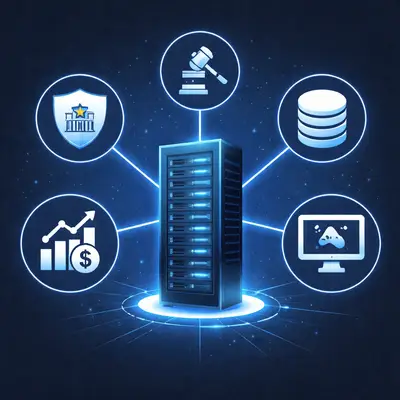
The common thread across all four stories is straightforward: AI is becoming a system layer. Compute still sets the pace, but the real differentiation is increasingly happening in memory, coordination, and workflow integration—where models stop being isolated tools and start becoming part of how institutions actually work.
—
Want to learn how to USE AI technology to make money and/or your life easier? Join our FREE AI community here: https://www.skool.com/ai-with-apex/about