Want to learn how to USE AI technology to make money and/or your life easier? Join our FREE AI community here: https://www.skool.com/ai-with-apex/about
AI’s New Shape: DeepMind in Korea, MIT’s Energy Tool, and OpenAI’s AGI Principles
Today’s AI news points in three directions at once: where AI institutions are expanding, how AI compute is being measured, and who is trying to define the rules for more powerful systems. Taken together, the stories show an industry moving beyond model demos and into geopolitics, infrastructure, and governance.
TL;DR
- Google DeepMind says it is partnering with South Korea’s Ministry of Science and ICT and launching an AI Campus in Seoul.
- DeepMind says the Korea initiative will focus on scientific discovery, local talent development, and AI safety research.
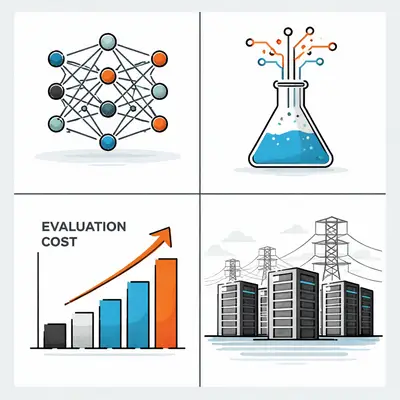
- MIT researchers unveiled EnergAIzer, a method for quickly estimating AI workload power consumption on specific processors.
- MIT says EnergAIzer reached about 8% error on real GPU workload data, with estimates produced much faster than slower traditional methods.
- OpenAI published a new principles document centered on democratization, empowerment, universal prosperity, resilience, and adaptability.
DeepMind expands its Korea footprint with a government partnership and Seoul AI Campus
What happened
Google DeepMind announced a partnership with the Republic of Korea’s Ministry of Science and ICT, alongside plans for Google to establish an AI Campus inside its Seoul offices. The company says the initiative is designed to accelerate scientific discovery, support local talent, and advance AI safety research.
Why it matters
This looks bigger than a routine office expansion. It signals that major AI labs are increasingly embedding themselves inside national innovation systems, where research, industrial policy, talent pipelines, and safety discussions are becoming part of the same strategic package.
Key details
- Google DeepMind says it is partnering with South Korea’s Ministry of Science and ICT.[Link]
- The planned AI Campus will be located within Google’s Seoul offices.[Link]
- DeepMind says the effort is aimed at scientific breakthroughs, local talent development, and AI safety research.[Link]
- The company explicitly ties the announcement to Korea’s place in AI’s public history through the AlphaGo era.[Link]
- Local reporting says DeepMind CEO Demis Hassabis discussed AI safety with Korean leadership around the announcement.[Link]
Source links
https://deepmind.google/blog/announcing-our-partnership-with-the-republic-of-korea/?utm_source=openai
https://www.ajupress.com/view/20260427182770490?utm_source=openai
MIT’s EnergAIzer targets a basic AI bottleneck: fast power estimates
What happened
MIT News reported on EnergAIzer, a technique that predicts how much power an AI workload will consume on a given processor. The goal is to help data center operators and AI developers estimate energy use far faster than traditional approaches.
Why it matters
AI efficiency debates often focus on better chips or better models, but measurement is its own bottleneck. If power use can be estimated quickly and with reasonable accuracy, teams can make better decisions about deployment, scheduling, hardware choice, and cost planning before workloads go live.
Key details
- EnergAIzer is designed to estimate the power consumption of an AI workload on a particular processor.[Link]
- MIT says the method could estimate power consumption with about 8% error when tested on real AI workload information from actual GPUs.[Link]
- The article says that level of accuracy is comparable to slower traditional methods that can take hours.[Link]
- MIT frames the work as useful for both data center operators and algorithm developers.[Link]
- The broader context is growing scrutiny of AI electricity demand and power-system impact.[Link]
Source links
https://news.mit.edu/2026/faster-way-to-estimate-ai-power-consumption-0427?utm_source=openai
https://news.mit.edu/2026/3-questions-how-ai-could-optimize-power-grid-0109?utm_source=openai
OpenAI publishes a principles document for its AGI vision
What happened
OpenAI published a new document titled Our principles, authored by Sam Altman and dated April 26, 2026. In it, the company says its mission remains ensuring AGI benefits all of humanity and lays out five principles that it says guide its work.
Why it matters
This is not a product story; it is a governance and legitimacy story. OpenAI is trying to define the language around access, benefits, and adaptation at a moment when frontier labs face rising pressure from governments, customers, competitors, and critics.
Key details
- OpenAI’s document is titled Our principles and was published on April 26, 2026.[Link]
- The five principles listed are democratization, empowerment, universal prosperity, resilience, and adaptability.[Link]
- OpenAI says it wants to be transparent about when and why its operating principles change because it is now a much larger force in the world than it was a few years ago.[Link]
- Outside coverage has framed the document as part of broader debates over AGI governance, safety frameworks, and political positioning.[Link]
Source links
https://openai.com/index/our-principles/?utm_source=openai
https://www.forbes.com/sites/ronschmelzer/2026/04/27/openai-publishes-five-principles-for-its-agi-push/?utm_source=openai
Across all three stories, the pattern is clear: AI’s frontier is no longer defined only by better models. It is increasingly shaped by who hosts the research, who can measure and manage the energy cost, and who gets to write the principles that justify the next wave of deployment.
—
Want to learn how to USE AI technology to make money and/or your life easier? Join our FREE AI community here: https://www.skool.com/ai-with-apex/about