Want to learn how to USE AI technology to make money and/or your life easier? Join our FREE AI community here: https://www.skool.com/ai-with-apex/about
Daily Tech Research Brief: NVIDIA Pushes Multilingual OCR as MIT Honors Rising Faculty Leaders
Today’s research news shares a practical theme: institutions are rewarding work that connects advanced research to real-world use. One story is about AI infrastructure for document processing; the other is about how a top university defines faculty impact in 2026.
TL;DR
- NVIDIA introduced Nemotron OCR v2, a multilingual OCR model released through Hugging Face alongside a synthetic multilingual dataset.
- NVIDIA says the model was trained on about 12.2 million synthetic samples plus roughly 680,000 real-world images across six languages.
- The company reports throughput of 34.7 pages per second on a single A100 GPU under its benchmark setup, and says the model can handle multiple languages without language-specific switching.
- MIT named Jacob Andreas and Brett McGuire as the 2026 Harold E. Edgerton Faculty Achievement Award winners.
- MIT’s framing of the Edgerton Award highlights a broader mix of teaching, research, and service rather than research output alone.
NVIDIA releases Nemotron OCR v2 for multilingual document AI
What happened
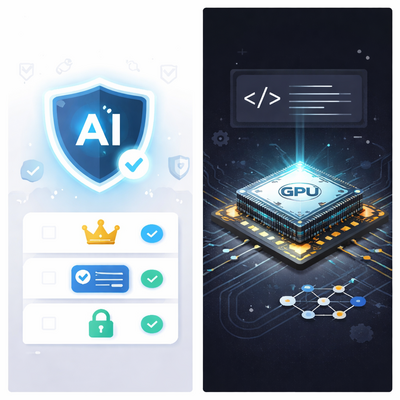
NVIDIA published a Hugging Face announcement for Nemotron OCR v2, a multilingual OCR system built heavily with synthetic training data. The release also includes the nvidia/OCR-Synthetic-Multilingual-v1 dataset and a browser-based demo, making it more than a research note and closer to a practical developer release.
Why it matters
OCR is a core layer in enterprise AI workflows, from document ingestion and search to records digitization and compliance. The bigger story here is not just speed: NVIDIA is making the case that synthetic data has become a serious scaling strategy for multilingual OCR, especially where labeled real-world data is limited.
Key details
- NVIDIA says the training dataset includes about 12.2 million samples across six languages. https://huggingface.co/blog/nvidia/nemotron-ocr-v2
- The company says the model was trained on that synthetic corpus plus roughly 680,000 real-world images. https://huggingface.co/blog/nvidia/nemotron-ocr-v2
- NVIDIA describes the multilingual version as a single unified model, so users do not need to identify the language beforehand or switch between language-specific OCR systems. https://huggingface.co/blog/nvidia/nemotron-ocr-v2
- Under NVIDIA’s benchmark setup, the model reached 34.7 pages per second on a single A100 GPU on OmniDocBench, which the company says is more than 28x faster than PaddleOCR v5. These are vendor-reported results and depend on hardware and pipeline settings. https://huggingface.co/blog/nvidia/nemotron-ocr-v2
- NVIDIA says the architecture builds on FOTS and uses a shared RegNetX-8GF detection backbone so detection, recognition, and relational reasoning can reuse features instead of repeating expensive image processing stages. https://huggingface.co/blog/nvidia/nemotron-ocr-v2
- The release is also notable for distribution: NVIDIA says the model is under the NVIDIA Open Model License and the dataset is under CC-BY-4.0. https://huggingface.co/blog/nvidia/nemotron-ocr-v2
Source links
https://huggingface.co/blog/nvidia/nemotron-ocr-v2
MIT names Jacob Andreas and Brett McGuire as 2026 Edgerton Award winners
What happened
MIT announced that Associate Professors Jacob Andreas and Brett McGuire are the 2026 winners of the Harold E. Edgerton Faculty Achievement Award. The annual award recognizes exceptional distinction in teaching, research, and service, and was established in 1982 as a tribute to Harold E. Edgerton’s support for younger faculty.
Why it matters
This is more than a campus honors story. MIT’s framing points to a broader academic signal: high-level faculty recognition is increasingly tied to the combination of research leadership, classroom impact, and institutional contribution.
Key details
- Jacob Andreas, an associate professor in MIT’s Department of Electrical Engineering and Computer Science and affiliated with CSAIL, studies natural language processing and AI, including language learning systems and methods that learn from human guidance. https://news.mit.edu/2026/edgerton-award-winners-announced-2026-0414
- MIT says Andreas helped develop a two-course NLP sequence that became a cornerstone of the AI + Decision-Making major and serves hundreds of students per semester. The institute also notes that his courses include exercises on the social and ethical implications of machine learning deployment. https://news.mit.edu/2026/edgerton-award-winners-announced-2026-0414
- Andreas joined MIT in 2019 and previously received a 2024 Sloan Research Fellowship along with MIT teaching honors. https://news.mit.edu/2026/edgerton-award-winners-announced-2026-0414
- Brett McGuire, an associate professor in MIT’s Department of Chemistry, works across physical chemistry, molecular spectroscopy, and observational astrophysics, with research focused on how chemical building blocks evolve alongside stars and planets. https://news.mit.edu/2026/edgerton-award-winners-announced-2026-0414
- MIT highlights McGuire’s work detecting polycyclic aromatic hydrocarbons in the cold interstellar medium, describing it as a finding that opens a new window on astrochemistry. https://news.mit.edu/2026/edgerton-award-winners-announced-2026-0414
- On teaching, MIT says McGuire took on 5.111 (Principles of Chemical Science), a large General Institute Requirement class enrolling roughly 150 to 500 students, and earned unusually strong student evaluations. McGuire joined MIT in 2020, was promoted to associate professor in 2025, and also received a 2026 Sloan Fellowship. https://news.mit.edu/2026/edgerton-award-winners-announced-2026-0414
Source links
https://news.mit.edu/2026/edgerton-award-winners-announced-2026-0414
Put together, these stories show two sides of the same shift: useful systems and multidimensional impact are getting more attention than prestige alone. Whether it is NVIDIA packaging OCR for deployment or MIT honoring faculty who combine research, teaching, and service, the common thread is practical relevance.
—
Want to learn how to USE AI technology to make money and/or your life easier? Join our FREE AI community here: https://www.skool.com/ai-with-apex/about